Alodine and chemical conversion coating for aluminium, without hexavalent chromium
Many drawings still call for Alodine 1200. Here is what it is, and how we apply that conversion coating today without hexavalent chromium.
Speak to a technician. Monday to Friday, 8:00 to 17:00 (CET).
What it is
Alodine 1200, a chromate conversion coating
Alodine is a Henkel brand. Alodine 1200 is one of its best-known products for aluminium, so well known that in many workshops «Alodine» has become the name of the process.
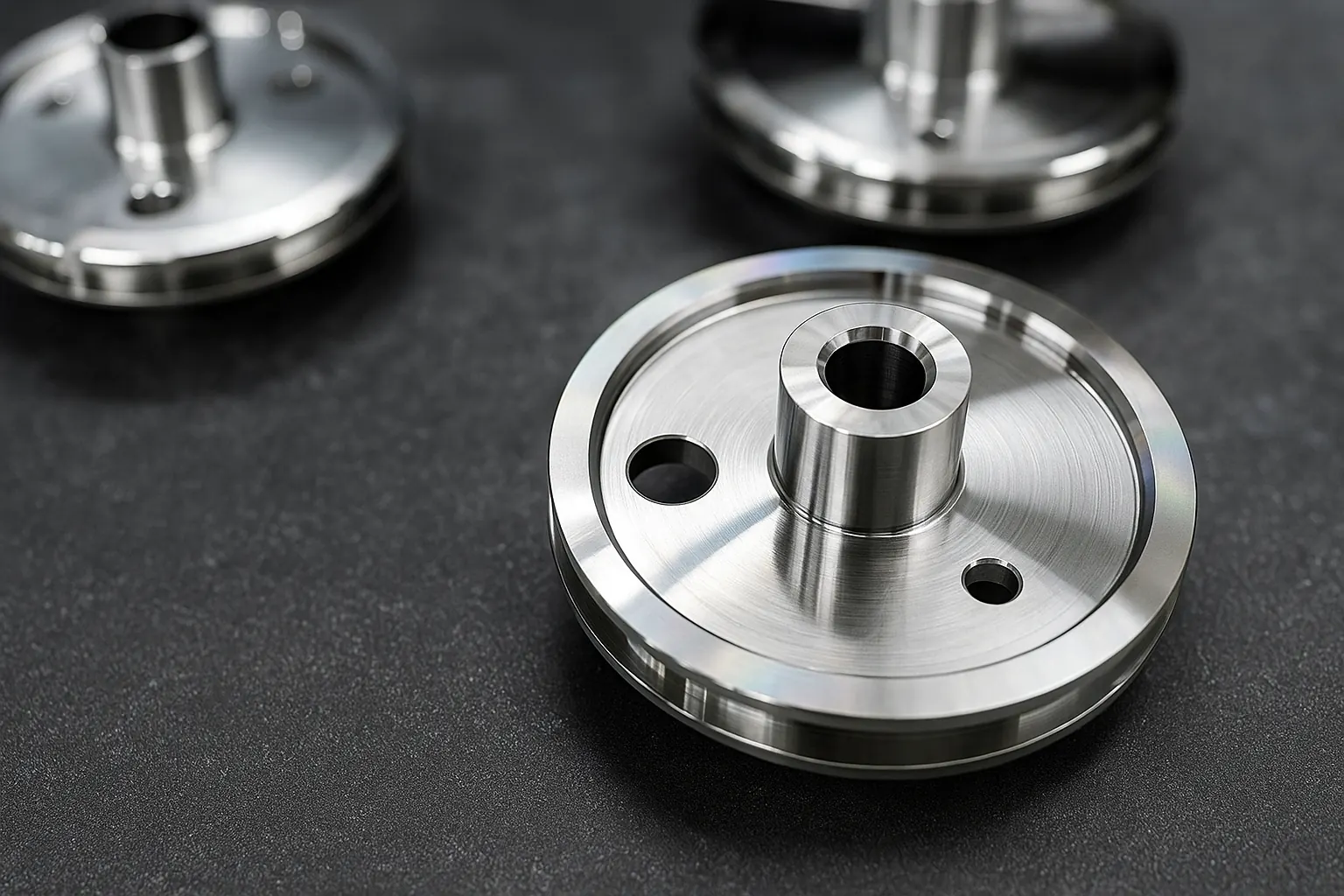
It is a chemical conversion bath: the aluminium surface reacts and turns into a very thin, adherent film. It is neither a paint nor an anodic layer. It adds almost no thickness, so it does not move the dimensions of the part.
The classic version is a chromate conversion coating: it uses hexavalent chromium, Cr(VI), and leaves the golden tint many people recognise at a glance. Alodine 1500 belongs to the same family, also with hexavalent chromium, but it is almost colourless.
What it is for
Painting, bonding, protection and conductivity
It is specified on parts that should not be anodised because they will be painted, bonded or have to act as an electrical ground.
Paint and adhesive base
On bare aluminium, paint sits on the surface rather than gripping it, and eventually flakes off. The conversion coating gives it stable adhesion and slows corrosion underneath the paint.
Protection without changing dimensions
It protects against corrosion without adding a layer. It protects less than anodising, but it works where anodising does not fit: tight tolerances, parts that are painted afterwards or parts that must conduct.
Conductivity
Anodising insulates. A conversion coating can leave the part conductive, which is why it is used on grounding points, shielding and electronics housings.
Aerospace and electronics
These are the sectors where it appears most often on drawings and specifications, almost always with a reference to MIL-DTL-5541.
Chromium VI
Why industry is moving away from hexavalent chromium
Hexavalent chromium protects very well, but it is toxic and carcinogenic. That is why it is increasingly restricted.
In Europe, REACH requires an authorisation to use hexavalent chromium compounds, and RoHS restricts it in electrical and electronic equipment. Many manufacturers already ask for Cr(VI)-free parts, partly so as not to pass the problem on to their own customers.
As a result, more and more specifications accept, or require, conversion coatings without hexavalent chromium. The reference standard, MIL-DTL-5541, separates the two cases and defines two classes of use:
- Type IConversion coating with hexavalent chromium. This is where classic Alodine 1200 fits.
- Type IIConversion coating without hexavalent chromium, such as trivalent coatings. This is the side of the standard we work on.
- Class 1AMaximum corrosion protection, painted or unpainted.
- Class 3Protection with low electrical contact resistance, for parts that must conduct.
The alternative
Trivalent or chrome-free conversion, depending on the part
We apply chemical conversion coatings without hexavalent chromium. We choose the bath according to what will happen to the part next.
We always start with controlled degreasing and activation: whether the paint grips depends on that step. On 2xxx and 7xxx alloys the preparation is specific, and we validate it first on a sample part. Then, one of these two baths:
Trivalent (Cr³⁺)
Protects the part and prepares it for painting or bonding. This is the option when the part must stay conductive (Class 3).
- Grounding points, shielding and housings
- Before painting or bonding
- Indoor parts
Chrome-free (Zr/Ti)
Based on zirconium and titanium. It gives the best grip for paint and adhesive, with basic protection.
- Parts that are always painted or bonded
- Strict environmental requirements
The colour
What about «gold Alodine»?
Gold is the colour of the classic chromate coating with hexavalent chromium. Cr(VI)-free conversion coatings do not produce it.
A part treated with Alodine 1200 usually ends up between gold and brown, more or less intense depending on the time in the bath. With trivalent it stays natural, greyish or slightly iridescent, and some baths leave a pale yellow. With zirconium and titanium, it is almost colourless.
That iridescence is part of the process, not a defect. If your drawing or your customer uses the gold tint to tell that a part has been treated, mention it on the call and we will go through it with you before the production run.
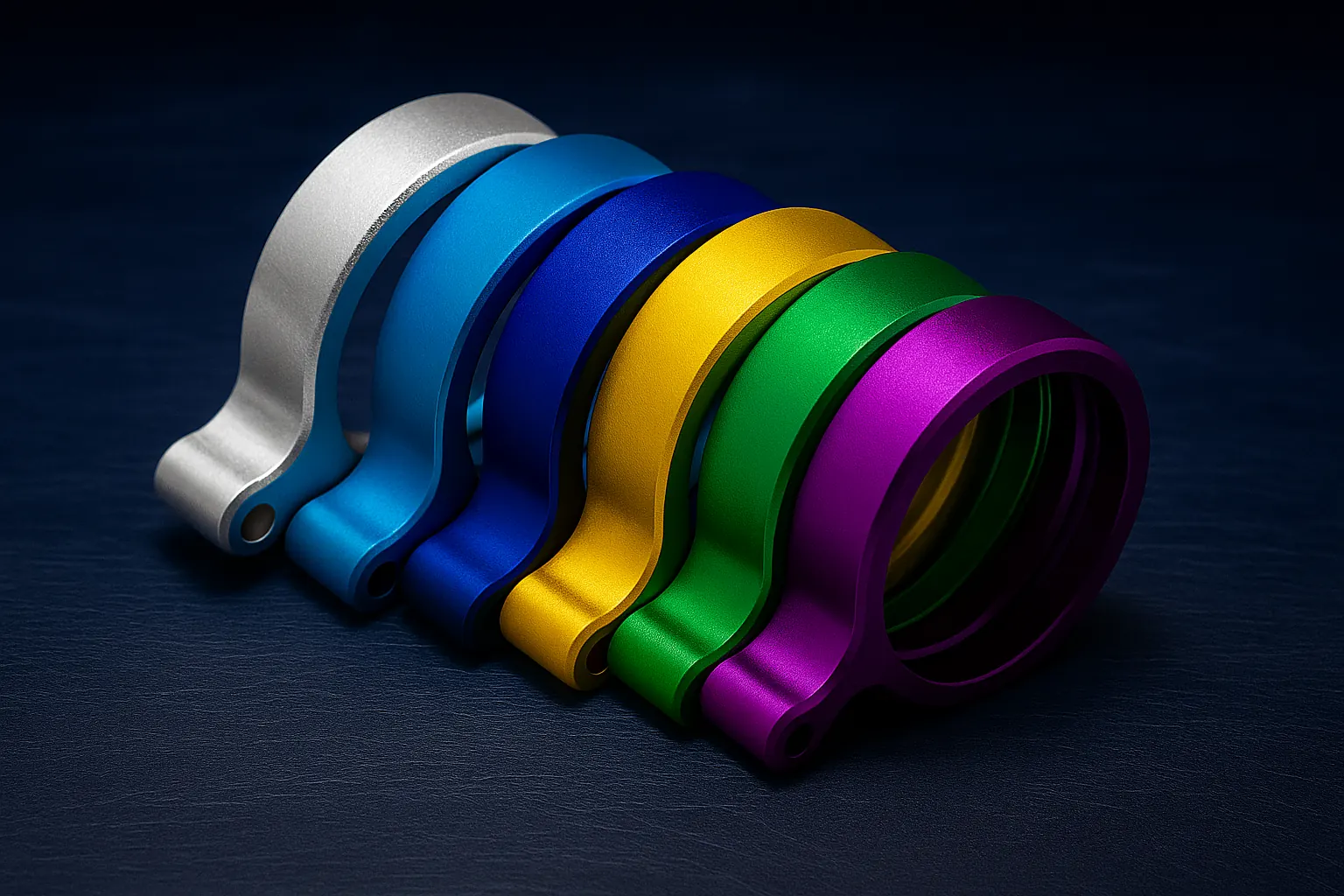
If what you want is to give the part a colour, that is a different treatment: colour anodising.
How we work
From your specification to the production run
We treat parts up to about 2 metres at our plant in Mataró, about 30 km from Barcelona: machined parts, brackets, housings and short profiles. They can reach us by carrier from anywhere in the EU.
- You tell us what will happen to the part (painting, bonding or grounding), the alloy and what your specification requires.
- If your specification requires it, we treat a test panel together with your parts for adhesion or salt spray testing.
- A sample part in about 72 hours and the production run in 5 to 10 working days, as a guide depending on volume and workload.
- Every batch leaves with its records and, if you ask for it, a certificate of conformity.
Frequently asked questions
Frequently asked questions
What is Alodine 1200?
A chromate conversion coating product for aluminium, from Henkel’s Alodine brand. It leaves a very thin film that protects against corrosion and prepares the surface for painting or bonding. It uses hexavalent chromium and usually leaves a golden tint.
Alodine 1200 or 1500?
Both are chromate conversion coatings with hexavalent chromium. Alodine 1200 leaves the golden tint and is common as a paint base. Alodine 1500 is almost colourless and is usually chosen for that look, often on parts that must conduct. We apply neither: we apply conversion coatings without hexavalent chromium.
What is the alternative without hexavalent chromium?
A trivalent chromium (Cr³⁺) conversion coating, or a chrome-free conversion coating based on zirconium and titanium. That is what we apply in Mataró, and it corresponds to Type II of MIL-DTL-5541, the type without hexavalent chromium.
Does the part stay conductive?
A trivalent conversion coating can leave the part conductive, with low electrical contact resistance (Class 3). If the part is painted afterwards, we mask the contact areas. The exact values are set by your specification, and we agree them with you before the production run.
Can it be used as a paint base?
Yes, that is its most common use. Paint and adhesive grip much better on a conversion coating than on bare aluminium. If your customer asks for an adhesion test, we carry out a cross-cut test on a part or a test panel.
Does it meet MIL-DTL-5541?
We work to references equivalent to Type II, without hexavalent chromium, in Class 1A or Class 3, and we agree the tests and documentation with you. We do not apply Type I. If your customer requires a specific approved process or supplier, mention it on the first call and we will look at it case by case.
Does your drawing call for Alodine 1200?
Speak to a technician on +34 937 55 62 77, Monday to Friday, 8:00 to 17:00 (CET). We will tell you whether a conversion coating without hexavalent chromium fits your specification before we treat the production run. Or leave your number and we will call you back within an hour.
Speak to a technician. Monday to Friday, 8:00 to 17:00 (CET). Leave your number and we will call you back within the hour.
Direct contact
- Phone
- +34 937 55 62 77
- bucisl@bucisl.com
- Plant
- Carrer dels Remences, 114, 08304 Mataró (Barcelona)