Aluminium anodising: parts that do not corrode, do not scratch and keep their colour
We have anodised production runs at our plant in Mataró, near Barcelona, for more than 40 years. A sample part in about 72 hours and the same colour order after order.
Speak to a technician. Monday to Friday, 8:00 to 17:00 (CET).
What it is
A hard layer grown from the aluminium itself
It is not a paint. That is why it does not peel.
Untreated aluminium stains, pits and scratches. It has a natural oxide film, but it is so thin that it cannot stand up to moisture, salt or wear.
Anodising means growing that film in a bath, with an electric current, until it becomes a hard layer that is part of the metal. There is nothing on top that can come off, chip or blister.
Before it is sealed, that layer is full of pores. That is where the colour goes, from bronze to black or from gold to blue. The pores are then closed so that the colour and the protection last.
What it is for
What your part gains
- No corrosionNo more white stains, white powder or pitting, outdoors as well.
- No scratchesThe surface is much harder than bare aluminium and stands up better to use.
- ColourNatural, black, bronzes, gold or bright colours, inside the metal itself.
- DurabilityNo maintenance beyond water and mild soap. And it still looks like metal.
- InsulationAn anodised surface does not conduct electricity. If an area has to make contact, it is masked.
How it is done
The process, step by step
Every step changes the final result. That is why every step is controlled.
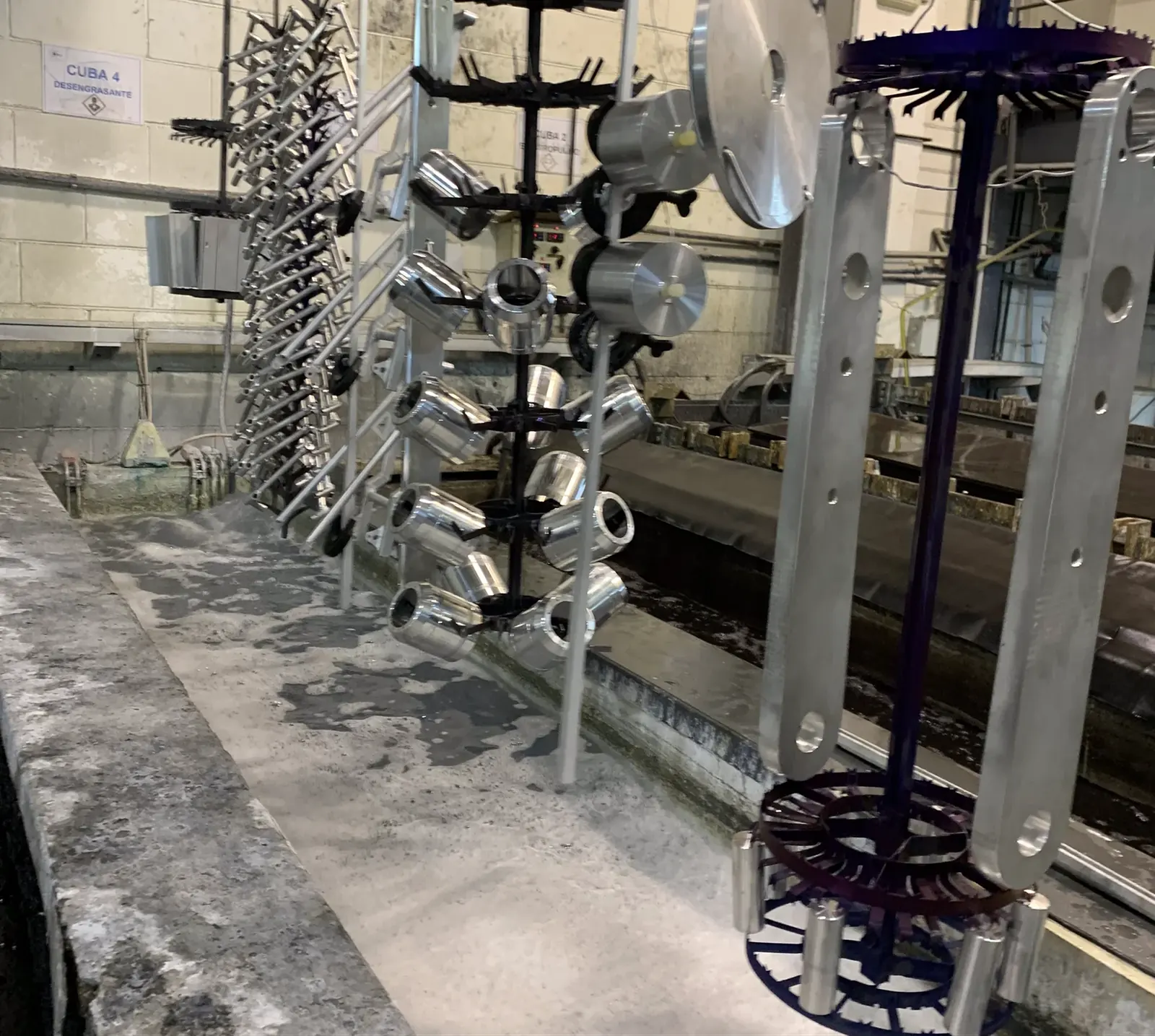
- 1. PreparationBead blasting, polishing or satin finishing, if needed. This is where the part is made matt, satin or bright.
- 2. Degreasing and etchingMachining oils, dirt and the natural oxide are removed, so the finish comes out the same across the whole part.
- 3. AnodisingThe part is the anode in a sulphuric acid bath. With direct current, the layer grows to the thickness specified.
- 4. Colouring, if requiredWith metal salts, dyes or light interference, the colour goes into the pores of the layer.
- 5. SealingThe pores are closed. Without good sealing, neither the colour nor the protection lasts.
- 6. Inspection and releaseWe measure thickness, colour and appearance, and the batch leaves labelled with its traceability.
Thickness
How many microns your part needs
The thickness depends on where the part will work, not on the part itself.
It is set by your drawing or your specification. If you are not sure, we will advise you. As a general reference, ISO 7599 classifies anodising by minimum thickness classes, in microns: the harsher the environment, the thicker the layer.
- Dry indoor useThe thinnest classes are enough: electronics, decoration, parts that never see the weather.
- Outdoor useA thicker layer and good sealing, for parts that work outdoors.
- Coastal and severe environmentsThe highest classes: salt air, constant humidity, strong cleaning products.
Alloys
Not all aluminium anodises the same way
The ones that respond best
6000 series (6060, 6063, 6061, 6082) and 5000 series: extrusions, sheet and machined parts. Even colour and good gloss.
With specific preparation
2000 and 7000 series, with copper or zinc: they can be anodised, but the shade and the layer vary. Always with a sample part first.
The difficult ones
High-silicon castings: the result tends towards grey and can come out mottled. We assess each case before accepting it.
Your part
Can my part be anodised?
- If it is aluminium and up to about 2 metres long, almost always: machined parts, covers, brackets, housings and short extrusions.
- The alloys most used in machining (6000 series) give the most even finish. With 2000, 7000 and castings, we run a sample first.
- Threads and areas that must not be treated are masked.
- If the part is painted or already anodised, it is stripped first.
- Steel, stainless steel and brass cannot be anodised. If your part is not aluminium, we will tell you before we start.
At BUCI
An aluminium anodising company in Mataró, for more than 40 years
We work for machine shops and manufacturers with small and medium-sized parts, up to about 2 metres, that are ordered again and again.
BUCI Tratamientos del Aluminio, S.L. has been anodising aluminium for more than 40 years. At our plant in Mataró, about 30 km from Barcelona, we carry out natural, colour and black anodising, the preparation beforehand (bead blasting, polishing and satin finishing) and other aluminium treatments: hexavalent-chromium-free passivation and electropolishing. We work to ISO 9001 and issue a certificate of conformity per batch. We do not offer hard anodising.
- Short lead times, keptA sample part in about 72 hours and production runs in 5 to 10 working days, depending on volume. More than 99 % of deliveries on time.
- The same colour on every orderToday’s black is the black of your order a year from now: we measure every batch against its master sample.
- Speak to the people who do the workWe tell you which treatment suits your part, and when it needs none.
- Direct, with no middlemenOur own plant in Mataró. Bring the parts by appointment or send them by carrier from Spain and the rest of the EU.
Services
Related treatments
Colour anodising
Colour inside the aluminium that does not peel and comes out the same in every order.
Find out more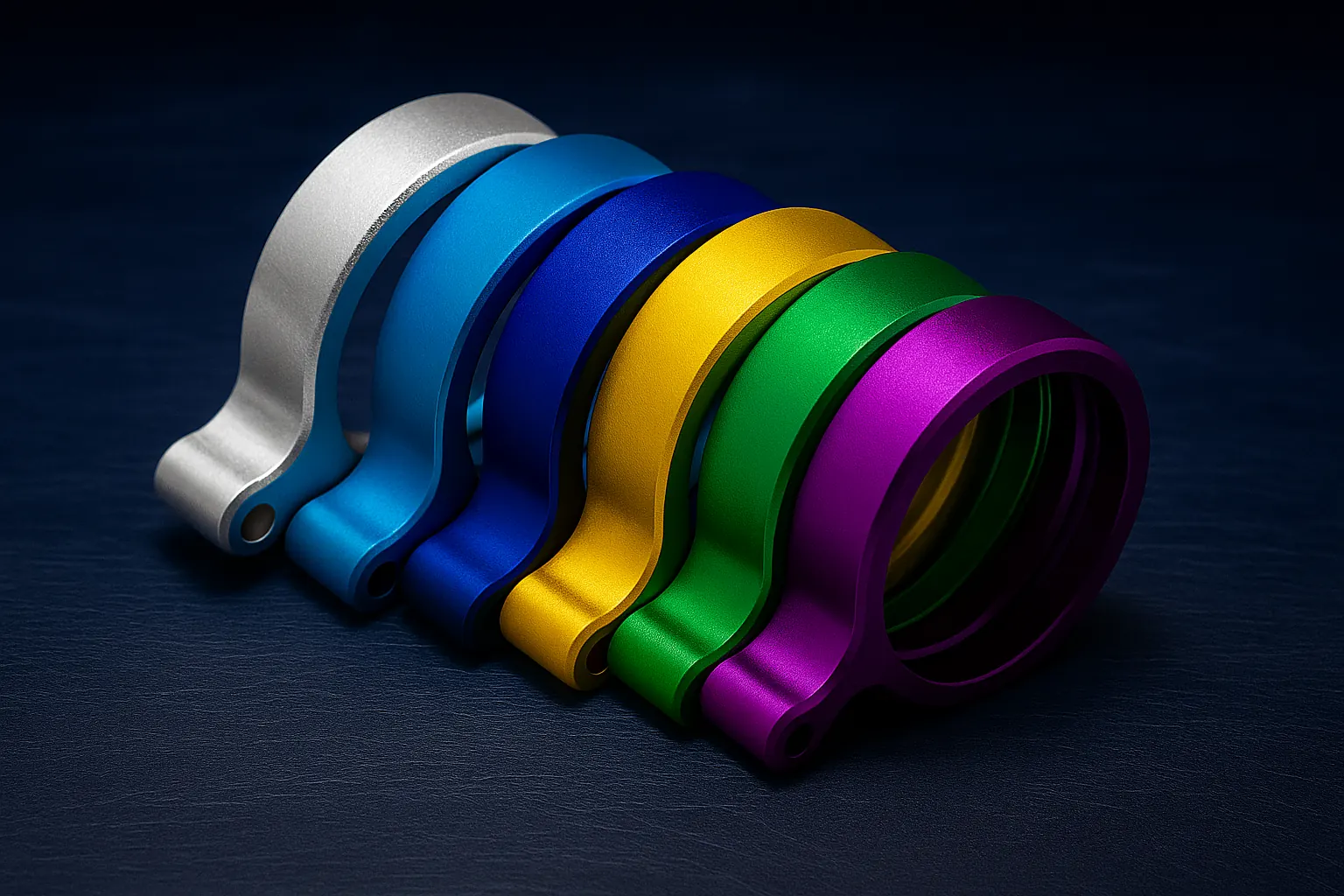
Bead blasting
An even matt finish before anodising, or a key for painting and bonding, with no iron stains.
Find out more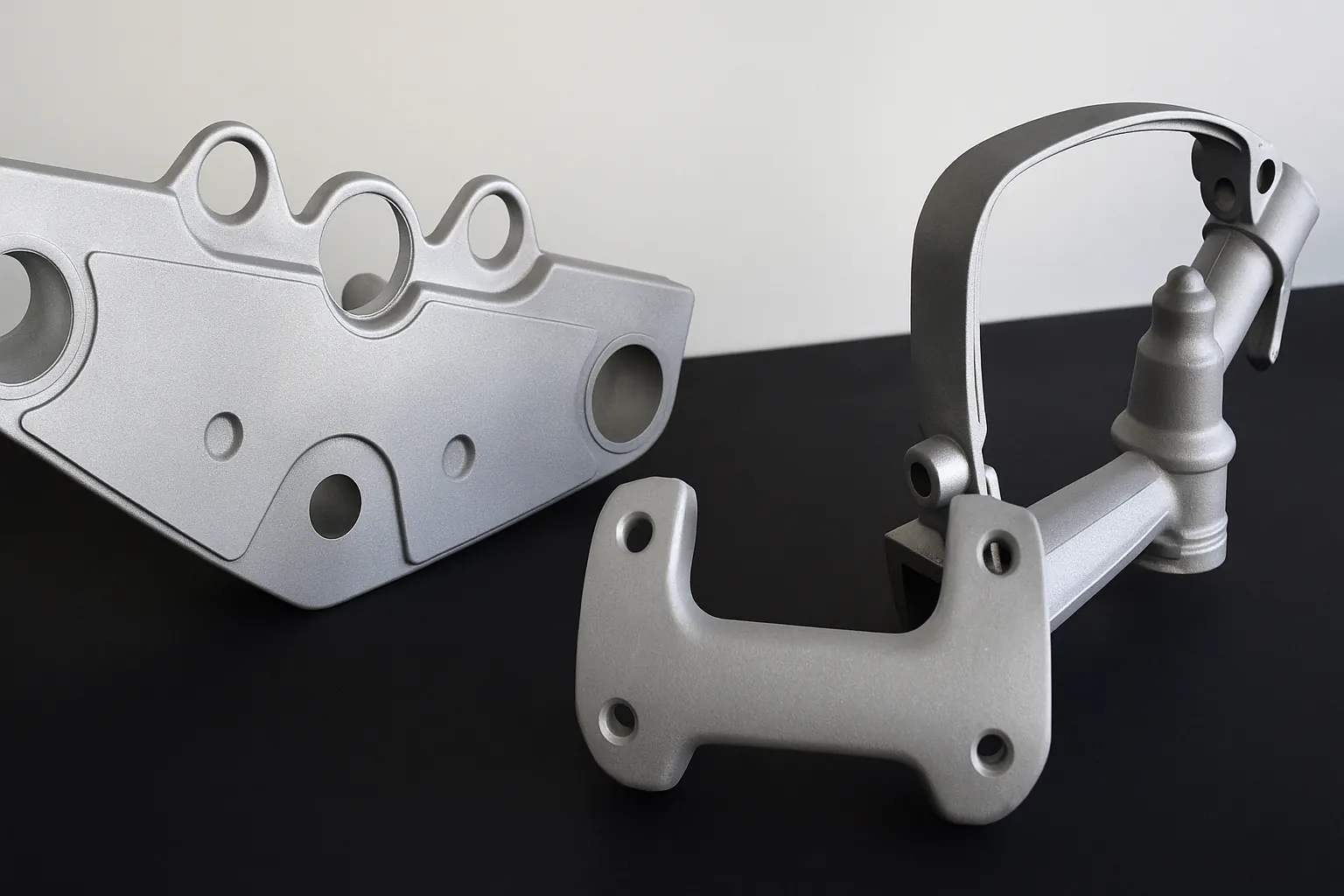
Polishing and finishing
Satin, brushed, mirror or matt, the same on every part and ready for anodising.
Find out more
Frequently asked questions
Frequently asked questions
What is anodised aluminium?
Aluminium with a hard oxide layer grown in a bath with an electric current. It protects against corrosion, stands up better to wear and can carry colour inside it.
Does anodising peel off?
No. It is not a layer stuck on top: it is the aluminium itself, transformed. Very heavy abrasion can wear it down, but it does not come away like paint.
Can any metal be anodised?
No. Anodising is for aluminium and its alloys. Steel is galvanised or painted; stainless steel is passivated or electropolished.
Can a painted or powder-coated part be anodised?
Yes, but the paint or coating has to be stripped first to leave clean aluminium. After that it is anodised as normal.
Can a used or repaired part be anodised?
Yes, if it can be stripped and given an even surface. Welds and repaired areas may come out a different shade: we tell you before we start.
How long does anodising last?
With the right thickness for the environment and good sealing, many years, outdoors as well. Outdoors, the key is not to fall short on thickness.
What coating thickness do you apply?
The one in your specification. If you do not have one, we advise you based on where the part will work; ISO 7599 serves as a general reference.
What are your lead times?
A sample part in about 72 hours. Production runs in 5 to 10 working days, depending on volume and workload. These are guide times, and more than 99 % of our deliveries arrive on time.
Can you take parts from outside Spain?
Yes, from the rest of the EU. Parts arrive and go back by carrier; who arranges and pays for the transport is agreed in the quotation.
Do you work for private individuals?
No. We work for businesses: machine shops and manufacturers, above all with repeat production runs.
Do you offer hard anodising?
No. We do natural and colour anodising, black, passivation, electropolishing and the preparation beforehand. If your part needs hard anodising, we will tell you.
Can your part be anodised? Ask us
Speak to a technician: +34 937 55 62 77, Monday to Friday, 8:00 to 17:00 (CET). They will tell you whether anodising suits your part and what we need to quote it in under 24 hours.
Speak to a technician. Monday to Friday, 8:00 to 17:00 (CET). Leave your number and we will call you back within the hour.
Direct contact
- Phone
- +34 937 55 62 77
- bucisl@bucisl.com
- Plant
- Carrer dels Remences, 114, 08304 Mataró (Barcelona)